Best Exercise Equipment for People Who Get Bored Working Out
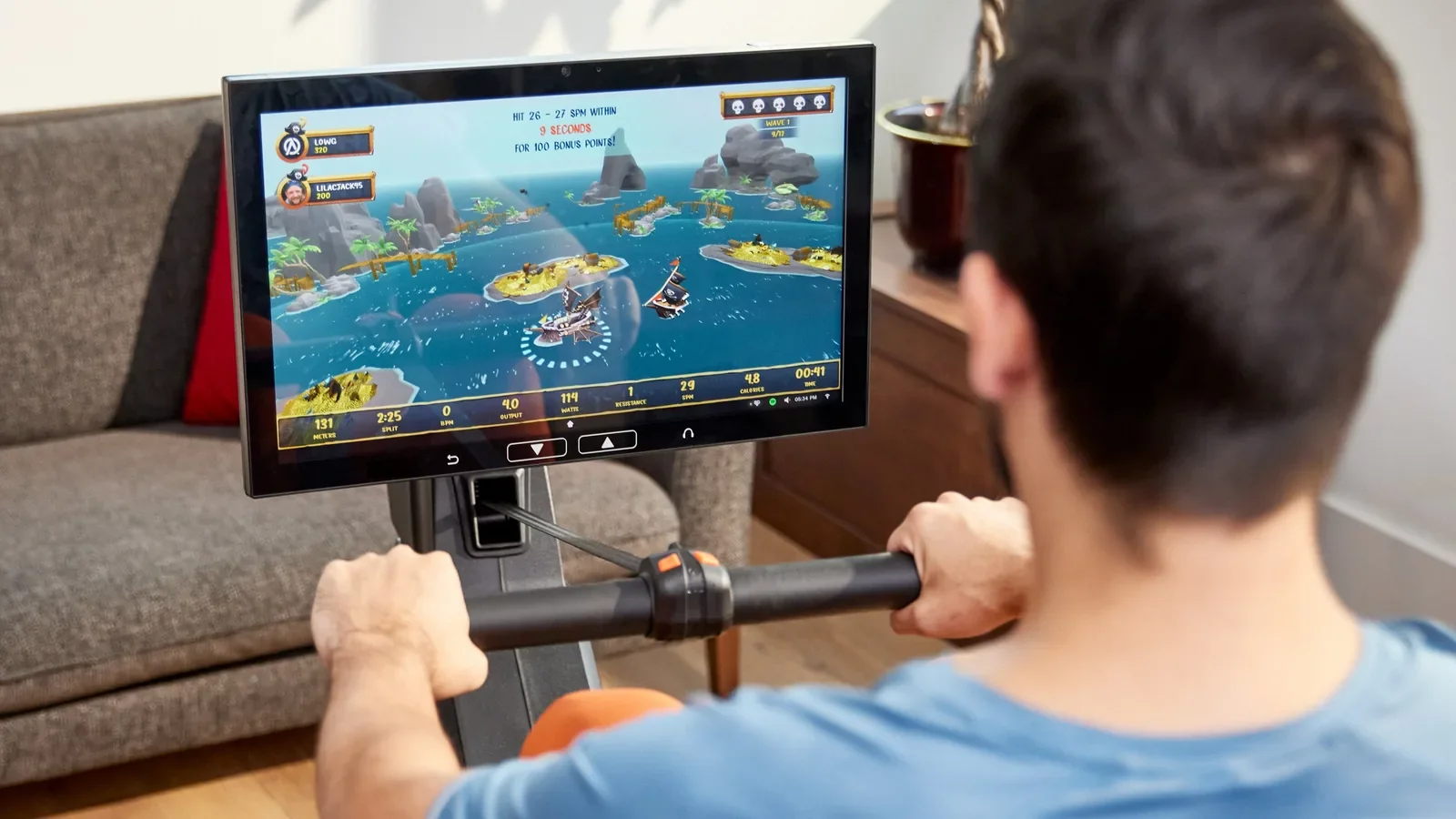
Short answer: The best exercise equipment for people who get bored easily is equipment that offers variety, interactive workouts, games, entertainment and measurable progress, rather than repeating the same routine every day. For most people, that means an interactive treadmill, a gamified rowing machine or a connected bike. Pick the movement you enjoy most, then make sure the software gives you plenty of ways to use it.
If you've ever bought fitness equipment with the best intentions and watched it slowly become somewhere to hang laundry, you're in good company. Week one is exciting. Week three feels like a chore. By month two, it's furniture.
Here's the part most people get wrong: you probably didn't quit because you dislike exercise. You quit because the workout turned into the same 30 minutes on repeat. Same machine, same speed, same view of the same wall. That isn't a willpower problem. It's a design problem.
It's also an extremely common one. Research going back to the 1980s estimates that roughly half of people who start a structured exercise program drop out within about six months. So if you've ever typed "best workout machine for people who hate exercise" into a search bar, here's some good news: you probably don't hate exercise. You hate boring exercise, and that's a much easier problem to fix.
When you're shopping for the best exercise equipment for people who get bored, top speed and motor size matter less than one question: will this still be interesting in month six? The equipment that passes that test tends to offer:
- Variety, so tonight's workout doesn't have to look like last night's
- Entertainment, for the days you just want the time to pass
- Progression, so you can actually see yourself getting better
- Competition, against other people or your own last score
- Interactivity, where your effort changes what happens on screen
- Multiple workout formats: games, classes, scenic routes, intervals and free sessions
Below, we compare the main options: interactive treadmills, gamified rowers, connected bikes, smart strength systems, free weights and traditional machines, plus a quick look at VR. Full disclosure, Aviron makes treadmills, rowers and bikes. We'll be clear about where we think we fit, and just as clear about where something else might suit you better.
In this article
- Why do people get bored working out?
- What exercise equipment is best if you get bored easily?
- 1. Interactive treadmills
- 2. Gamified rowing machines
- 3. Interactive exercise bikes
- 4. Connected strength equipment
- 5. Free weights and adjustable dumbbells
- What about VR fitness?
- Features to look for if you get bored easily
- Games vs classes
- What is the least boring cardio machine?
- How to make exercise less boring
- Best exercise equipment by personality
- FAQ
- Final verdict
Why Do People Get Bored Working Out?
Boredom isn't a personal failing. It's what happens when a workout gives your brain nothing to do, and it's incredibly common. In a 2021 OnePoll survey of 2,000 regular exercisers commissioned by the fitness app Freeletics, 43% said they get so bored during workouts that they'd rather not do them at all, and 73% said their routines would likely be more enjoyable if they felt like playing a game.
Most of the reasons people lose interest fall into a handful of patterns:
- Repetitive movement. A half-hour jog is somewhere around 5,000 nearly identical steps. A 20-minute row is roughly 500 strokes. Your body benefits from the repetition. Your attention does not.
- The same workout every session. Same program, same speed, same playlist. Even a workout you loved in week one loses its edge when nothing about it changes.
- No visible progress. Fitness improves slowly, and without tracking you can't see it happening. Effort with no feedback starts to feel like effort for nothing.
- Nothing at stake. No opponent, no target, no score. The only goal is finishing, which is a pretty thin reason to start.
- Passive workouts. When you're just enduring the minutes, your attention turns inward to your breathing, your legs and the clock, and all three are busy telling you how much is left.
- Too much reliance on motivation. Motivation is plentiful on a Monday in January and scarce on a rainy Thursday in March. A routine that runs on willpower alone stalls when willpower does. (If that's where you are now, here's how to get your fitness motivation back.)
- Classes that don't click. Instructor-led classes are fantastic for plenty of people. Others don't love being cheered at, can't make a schedule work, or never connect with an instructor's style. If that's you, it's easy to decide exercise isn't for you when really it was the format that wasn't.
This matters more than it sounds. A review of 24 studies found that how good exercise feels while you're doing it predicts how active people will be later on, while how they feel afterward doesn't. A workout that's dull in the moment is one you're less likely to repeat, however good you feel when it's over. We unpack that research in why exercise feels easier when you enjoy it.
The common thread: boredom is usually a sign that the workout has stopped changing, not that you've stopped caring. Which points to two fixes, variety and engagement.
Why Workout Variety Matters
Variety doesn't mean buying five machines or reinventing your routine every week. It means changing enough of each session that your brain has something new to work with. There are more levers than most people realize:
- Duration: a 10-minute blast one day, a 45-minute steady session the next
- Intensity: easy recovery, steady endurance or hard intervals
- Workout format: a game, a coached class, a scenic route or a free session
- Goals: a distance personal best, a weekly streak, a race or a new skill
- Entertainment: a show, a playlist, a podcast, or nothing at all
- Competition: a friend, a leaderboard or your own last score
Research backs this up. In a six-week randomized trial published in the Journal of Behavioral Medicine, inactive university students given a high-variety exercise program stuck with it better than those given a low-variety one. We dig into the rest of the evidence in the science of workout variety.
Can Gamification Make Exercise More Engaging?
Yes, and it's one of the best tools we have against boredom. Gamified fitness borrows the mechanics that make games hard to put down and applies them to exercise, so every workout has a goal inside it beyond "finish." The usual ingredients:
- Points that reward your effort as it happens
- Leaderboards that show where you stand against other people
- Challenges with a clear finish line, like a weekly distance target
- Games where your pace, stroke or pedaling is the controller
- Progress tracking, from personal records to streaks
- Rewards like badges, levels and unlocks, the small wins that keep you coming back
The evidence is encouraging. A 2022 meta-analysis of 16 randomized controlled trials found that gamification produced a small-to-medium increase in physical activity, and a smaller effect was still there months after the programs ended. In a 2019 trial in JAMA Internal Medicine, the group that competed against other players added about 920 steps a day, the biggest gain in the study, and it was the only group whose boost held up after the program finished.
One distinction separates good gamified fitness equipment from the gimmicks: in real gamified fitness, your effort is the input. Speed up and something on screen responds. In weaker versions, a game or a video simply plays near you while you work out independently of it. Same screen, very different experience. And no, you don't have to be a gamer. If you've ever checked a race result, chased a personal best or kept a streak alive, these mechanics are already aimed at you. We go deeper in our guide to the best cardio machine for gamers.
What Exercise Equipment Is Best If You Get Bored Easily?
Here's how the main categories compare on the three things that matter most when boredom is the enemy.
| Equipment | Best for | Variety | Entertainment | Competition |
|---|---|---|---|---|
| Interactive treadmill | Walking, running, hiking | High | High | High |
| Gamified rower | Full-body cardio | High | High | High |
| Interactive bike | Low-impact cardio | High | High | Medium to High |
| Smart strength system | Guided strength training | High | Low to Medium | Low to Medium |
| VR fitness headset | Game-style cardio, boxing, dance | High | High | Medium |
| Traditional treadmill | Running and walking | Medium | Low | Low |
| Dumbbells | Strength | High | Low | Low |
| Cable machine | Strength | High | Low | Low |
Notice that the interactive version of each machine beats the traditional one, even though the hardware does the same job. That's the open secret of fun exercise equipment: the difference is almost entirely software. A treadmill with a blank screen and a treadmill running games, races and scenic routes ask your legs for exactly the same thing. Only one of them gives your brain something to do.
That said, the best choice depends on the movement you actually enjoy. Software can make a workout far more engaging, but it can't make you love a movement you dread. A quick way to narrow it down:
- You like walking or running, or want to start: an interactive treadmill
- You want full-body cardio, or you hate running: a gamified rower
- You want low impact and long, seated sessions: an interactive bike
- You'd rather lift than do cardio: connected strength equipment or free weights
1. Interactive Treadmills
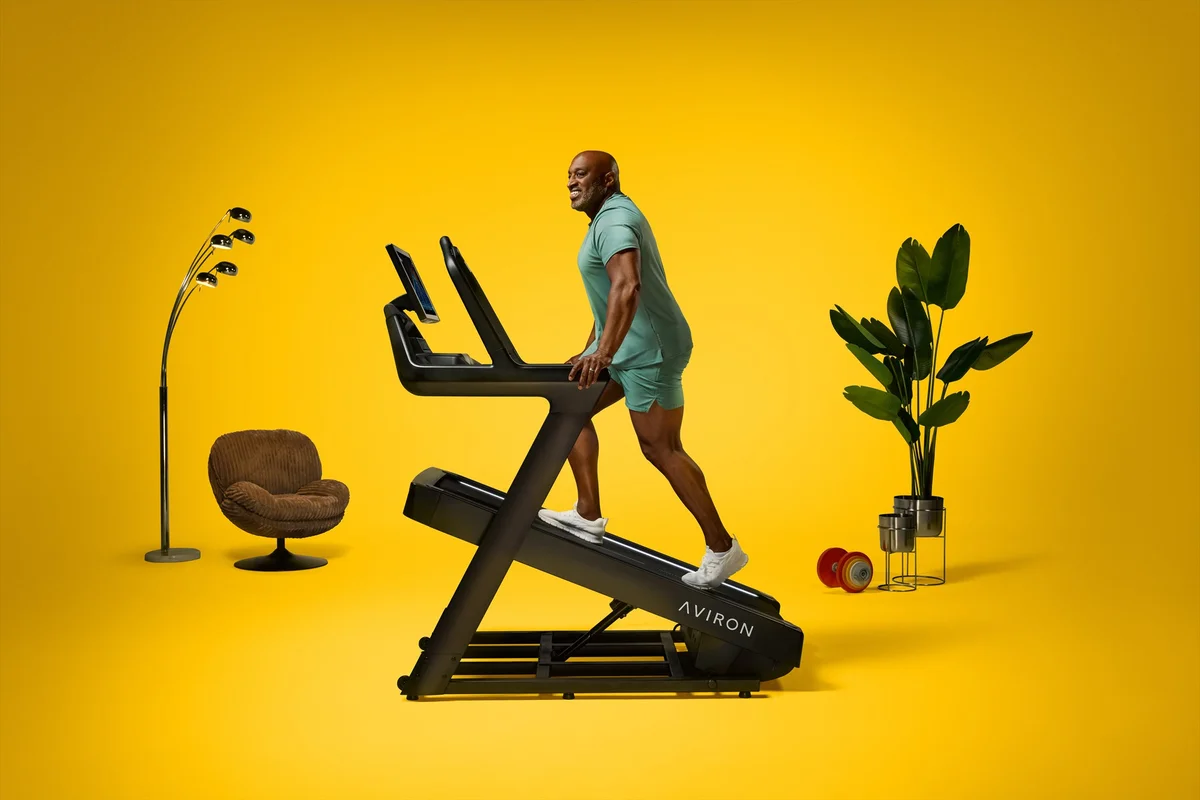
Why Treadmills Work Well for People Who Get Bored
The treadmill has a branding problem. Its ancestor, the prison treadwheel, was introduced in English jails in 1818 as a punishment, and the nickname "dreadmill" suggests plenty of people think the modern version still is one.
But the treadmill is also the most versatile cardio machine you can own. Almost everyone can walk, so it works for complete beginners and serious runners alike, and it covers more workout types than any other machine:
- Walking, from an easy desk-walk pace to a brisk power walk
- Running, whether that's a first 5K plan or marathon training
- Hiking and incline walking, which raise the intensity without adding speed (the 12-3-30 workout is the famous example)
- Intervals that mix speed and incline changes to keep sessions short and sharp
- Scenic workouts along real-world routes
- Games that use your pace as the controller
- Streaming, for the days you want to catch up on a show
- Challenges like distance targets and races against other people
- Custom workouts you build and save yourself
The catch: a traditional treadmill only really gives you the first four. The rest of that list lives in the software, which is why an interactive treadmill is such a different proposition for someone who gets bored easily. Connected treadmills from Peloton and NordicTrack cover classes and scenic routes well, and both have started adding game modes. The question is how much of the list you get on one machine.
Best Treadmill for People Who Get Bored: Aviron
We make these, so weigh this section accordingly. But this is the exact problem Aviron was built to solve. Our founder, Andy Hoang, has ADHD. He believed in working out but could never stick with it, yet he could lose hours in a video game. So he asked a better question: what if the problem isn't people, it's the product?
Every Aviron treadmill runs Aviron World, our software platform, which engineers the psychology that makes games so hard to put down (reward loops, streaks, progress, instant feedback and competition) into every type of workout:
- Science-backed games where your speed and incline are the controller. Blast bugs in Blaster Brigade, put out fires in Blaze Breakers, or fly through rings in SkyQuest. (Here's the full treadmill program list.)
- Competition, including live head-to-head races, leaderboards and Power Play, a lane-switching game that up to 20 people can play together in real time
- Scenic workouts through real places, for when you'd rather sightsee than score
- Guided workouts and structured programs, including more than 300 Les Mills workouts, for the days you want someone else to decide
- Entertainment, with Netflix, Hulu, Disney+ and YouTube right on the screen
- Custom workouts: set a time or distance goal, your intervals, rest and incline, save it, then race it again to beat your best
- Progress you can see, from stars and levels to unlocks, personal records and your full workout history
No single feature is the point. The point is that you don't have to decide between playing a game, watching something, competing or following a workout. You can do a different one every night on the same machine, depending on your mood. Feeling competitive? Race someone. Fried after work? Walk a scenic route or put a show on. Want structure? Follow a program. That flexibility is a big part of why 92% of Aviron members are still working out a year later.
"Interactive and engaging. Workout is over seemingly before it even starts."
Which Aviron Treadmill Is Best?
All three run the full Aviron World library, so the decision comes down to your space and how you like to move.
- Justice: best for compact spaces. A real treadmill (12.5 mph, 15% incline) for walking and running that folds upright against the wall when you're done. Add the WalkDesk and it doubles as a walking desk. If you've been eyeing walking pads, here's how the two compare.
- Podium: best for runners. A larger 22" x 60" deck, a faster 14 mph top speed and more incline (up to 18%), on a 4.5 CHP motor. It still folds, which is rare at this level, and it takes the WalkDesk too.
- Summit: best for incline training and hiking. Climbs to 42% and descends to a -6% decline, with hiking handles that put the incline and speed controls under your hands. It's purpose-built for steep work, so it doesn't fold. Wondering what 42% feels like? Here's how steep that really is.
For the full side-by-side, including dimensions and folded footprints, see Which Aviron treadmill? Justice vs Podium vs Summit.

Three treadmills, one library of games, races, classes, scenic routes and streaming. Justice folds and takes a walking desk, Podium is built for runners, Summit climbs to 42%.
2. Gamified Rowing Machines
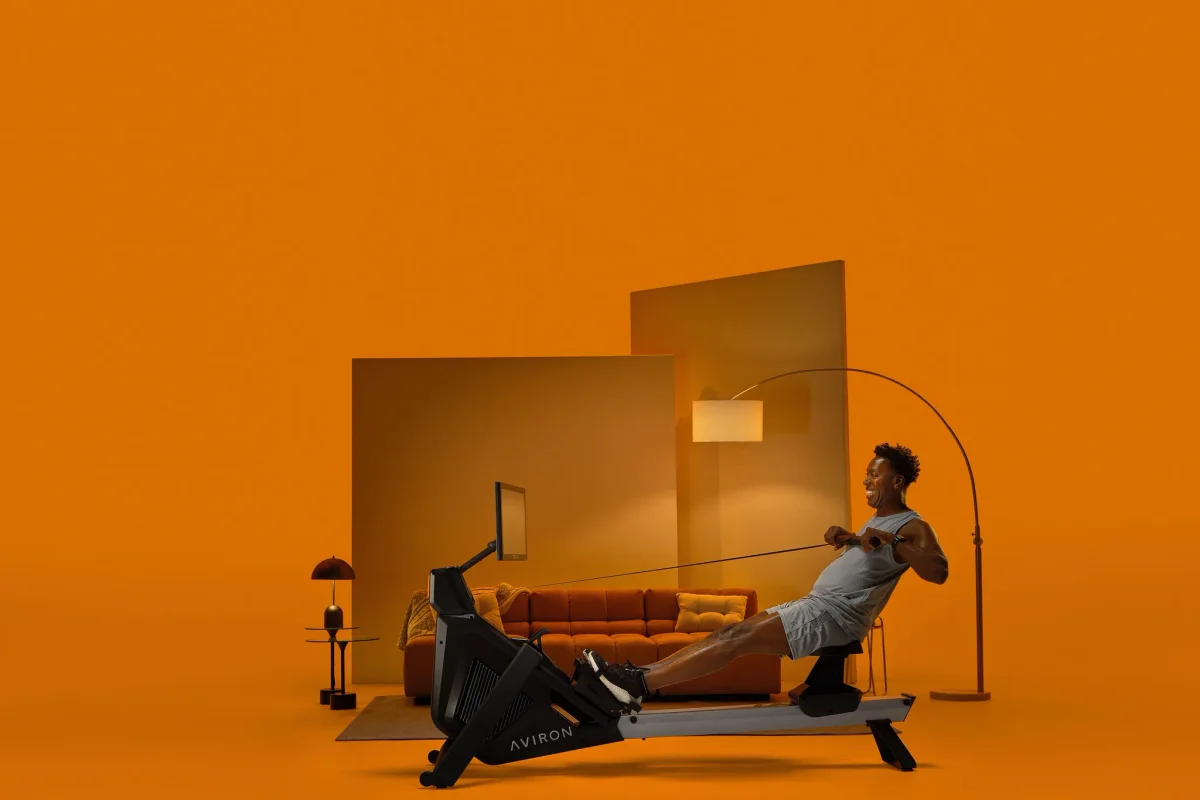
Why Rowing Is Good for Easily Bored Exercisers
Rowing is one of those workouts people either love or have never really tried. For anyone who gets bored easily, it has some real advantages:
- It's full-body. Every stroke works your legs, glutes, back, arms and core, so there's a lot going on physically and mentally. It's hard to zone out when your whole body is involved.
- Short workouts feel like real workouts. Because so much muscle is working, 15 or 20 minutes on a rower is a genuine session. Less time on the machine means less time to get bored.
- It's made for racing. Rowing is a racing sport at heart, with split times, standard distances like 2,000 meters and a long tradition of side-by-side competition. All of that translates naturally to leaderboards and live races.
- It's easy to turn into a game. Each stroke is a distinct input with a power and a rate attached, which maps neatly onto game mechanics. Pull harder and something happens.
- It's low impact. No pounding, which makes it a great fit if running bothers your joints.
If you already row and find it a slog, we've collected ways to prevent rowing boredom.
Best Rowing Machine for People Who Get Bored: Aviron Strong Rower
The Strong Series Rower is where Aviron started, and it's still the clearest example of what we mean by fitness entertainment. It runs the same Aviron World platform as our treadmills, on a 22" HD screen that pivots:
- Games where your stroke is the controller, like Rags to Riches, where every pull fires a cannon at enemy ships
- Racing, live and head to head against other members, plus Pros vs Joes, where you take on professional athletes
- Competition through leaderboards and multiplayer games. In SkyQuest, people on the same route fly together in real time, whether they're rowing, running or riding.
- Guided programs with coaching on technique and training, starting from your very first stroke
- Scenic rowing through real-world destinations
- Entertainment, with Netflix, Hulu, Disney+ and YouTube on the screen
- Strength training integration. Dual air and magnetic resistance takes you from smooth cardio to heavy, strength-style pulls, and the pivoting screen lets you follow off-machine strength and Les Mills workouts on the floor. More in strength training with Aviron.
Rowing is especially useful if you want serious cardio without running. It's low impact, it's quiet (around 60 dB, about the level of a normal conversation), and the Strong Rower stands upright for storage when you're done.
"I usually feel every second of misery on cardio machines... It's been almost three months and I've rowed at least five days each week without even realizing it."
To be fair to the field, there are other interactive rowers worth knowing about. Ergatta builds game-based workouts around a water rower, Hydrow focuses on athlete-led sessions filmed on real water, and a Concept2 can be paired with third-party apps for more interactivity, including the Aviron app. If you're weighing options, our rower comparison lays out the differences.

Dual air and magnetic resistance, a 22" pivoting screen and a 507 lb weight capacity. Your stroke is the controller.
3. Interactive Exercise Bikes
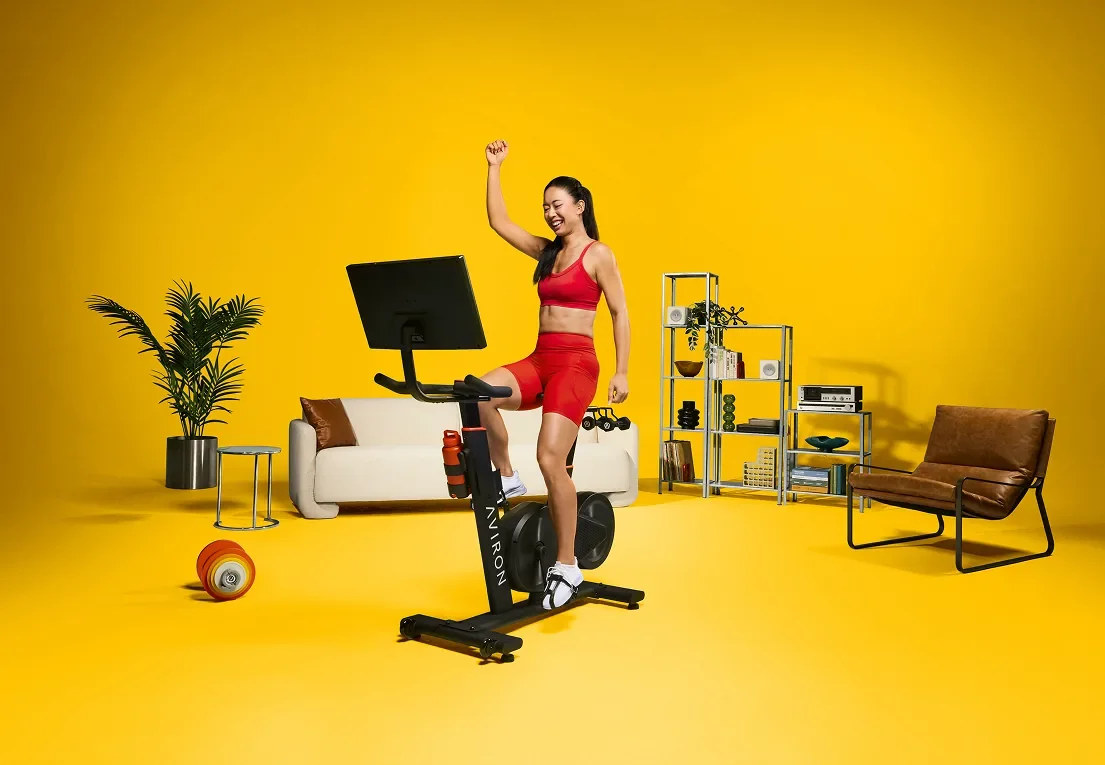
Bikes kicked off the connected fitness boom for good reason. They work well for people who get bored because they combine:
- Low-impact cardio that's easy on your knees, hips and ankles
- Classes, the format that made indoor cycling a phenomenon
- Scenic rides along real roads and through virtual worlds
- Competition, from simple leaderboards to full-blown virtual races
A bike is also the easiest machine to pair with entertainment. You're seated, your upper body is still, and a long ride lines up nicely with a long episode.
There are several good ecosystems, and they suit different personalities:
- Peloton is built around instructor-led classes, with a live leaderboard and a huge community. Its Lanebreak mode adds a game-style option for riders who want one.
- NordicTrack with iFIT focuses on trainer-led and scenic workouts filmed around the world, with the bike adjusting your resistance automatically. It has also added game-style races licensed from Ergatta.
- Zwift-compatible setups pair a smart trainer or smart bike with Zwift's virtual worlds, which are especially strong for group rides and racing. (Zwift now also owns Rouvy, though the two still run as separate apps.)
- Aviron's Fit Bike S runs the same games, races, scenic rides, classes and streaming as the rest of our lineup, including Les Mills' cinematic, story-driven ride, The Trip.
Who Should Choose a Bike?
A bike is the right call if you:
- Prefer cycling to running or rowing
- Want lower impact, because of your joints, an injury you're working around, or simply comfort
- Enjoy classes or racing, since both formats are mature and well supported on bikes
- Want long endurance sessions you can comfortably sustain for 45 minutes or more
For more on what riding does for you, see the benefits of a stationary bike.
4. Connected Strength Equipment
If cardio is the part that bores you, connected strength equipment is worth a look. The best-known example is Tonal, alongside newer options like Speediance's Gym Monster. These are smart cable systems that replace stacks of plates with motor-driven digital resistance, and they typically offer:
- Digital weight that changes at the tap of a button
- Strength programs that tell you exactly what to do, set by set
- Automatic progression, raising the weight as you get stronger
- Workout tracking that logs every rep, set and total volume, often with form feedback
Why Strength Training Can Prevent Boredom
Strength training has a built-in variety advantage. A treadmill, rower or bike asks you to repeat one movement. A strength system can program hundreds of exercises across every muscle group, and each set is a short, finite challenge with a breather at the end. Progress is unusually visible, too: the number on the screen goes up.
The limitation is entertainment. Connected strength equipment can coach and track you brilliantly, but it usually offers less of the games, races and shows that make game-based cardio fly by, and nobody watches an episode in the middle of a set of lunges. If you love lifting, that won't matter. If you need distraction to get through a workout, it might.
There's a middle ground, too. Many cardio platforms now include strength work. On Aviron, the pivoting screen and off-machine workouts, including Les Mills strength and HIIT sessions, let you mix lifting into the same routine.
5. Free Weights and Adjustable Dumbbells
Here's something a fitness tech company isn't supposed to admit: the most varied equipment you can buy might be a pair of dumbbells. Traditional strength gear is relatively affordable, compact and endlessly flexible:
- Dumbbells, ideally adjustable ones, which save a lot of space
- Kettlebells for swings, carries and full-body power work
- An adjustable bench, which multiplies what your dumbbells can do
- Resistance bands, cheap, portable and great for warmups and accessory work
The strength: hundreds of exercises. Nearly every gym movement has a free-weight version.
The weakness: you have to bring the variety and the motivation yourself. Dumbbells won't plan your session, tell you when you've hit a personal best, or notice that you skipped Thursday. For self-starters who enjoy designing their own workouts, that's freedom. For people who get bored easily, it's often exactly the problem.
If you go this route, give yourself structure: follow a program, log your lifts, and set specific targets, like adding a rep or a little weight every couple of weeks.
What About VR Fitness?
VR deserves a mention, because it's the most game-native workout there is. On a headset like Meta Quest, apps such as Beat Saber, FitXR and Les Mills' VR workouts put you inside the game, slicing, punching and dancing your way through a session.
It's genuinely fun and can get surprisingly sweaty. The trade-offs: a headset on a sweaty face isn't for everyone, sessions tend to be short, most of the work comes from your arms and bodyweight, and it's hard to keep raising the intensity over months the way you can with incline or resistance. VR works best as a fun extra alongside your main equipment rather than instead of it.
What Features Should You Look for If You Get Bored Easily?
The best workout equipment for motivation isn't the one with the longest spec sheet. It's the one that gives you the most reasons to come back. Whatever category you choose, use this checklist to separate equipment that will hold your interest from equipment that will hold your laundry.
Workout Variety
Look for equipment that offers genuinely different workout types, not 500 versions of the same class. Games, classes, scenic routes, programs and free sessions are different experiences. Ten flavors of one format are not.
Games and Gamification
Points, levels, challenges and competition give each session a goal beyond the clock. The test for any brand: does your effort change what happens on screen, or is the game just playing nearby?
Entertainment
Check whether streaming services and media apps run on the built-in screen. Some brands let you open Netflix or YouTube; others lock the screen to their own content.
Competition
Leaderboards, multiplayer and live racing add a kind of accountability that doesn't rely on willpower. Matched competition, against people at your level or your own previous score, works better than a global ranking topped by pros. More on why fitness leaderboards matter.
Progress Tracking
Personal records, streaks and workout history turn invisible fitness gains into something you can see. If you can't tell you're improving, it's much harder to keep going.
Custom Workouts
Being able to build and save your own sessions means you're never stuck with someone else's idea of a good workout. Bonus points if you can race your own creations to beat your best.
Scenic Workouts
Virtual routes and destinations are perfect for the days you don't want a scoreboard. A walk through somewhere beautiful beats a staring contest with a wall.
Social Features
Friends lists, communities, group workouts and shared challenges. Even a virtual partner helps: in one exergaming experiment, people held plank exercises significantly longer alongside an onscreen partner who was always slightly better than they were, compared with exercising alone.
One more question to ask before you buy: what does the machine still do without a subscription? Some connected equipment loses almost everything when you stop paying, while others keep basic metrics, history and streaming. Better to know before you buy than after. (Here's how it works on Aviron.)
Games vs Classes: Which Is Better for Workout Motivation?
This is the big fork in the road for connected fitness, and the honest answer is that it depends on what makes you tick.
| Classes | Games | |
|---|---|---|
| Works best if you enjoy | Coaching, structure, instructor personalities, group energy | Competition, objectives, challenges, scores, instant feedback |
| What brings you back | A favorite instructor and the feeling of a shared session | A score to beat and a goal inside every workout |
| Watch out for | Losing interest if you never click with an instructor | Burning out on one game if it's your only option |
Classes work well for people who like being coached. A good instructor brings structure, form cues and a personality to show up for, and the group energy of a live class is real. Peloton built an enormous community on exactly this, and if classes are what get you moving, that's a great fit.
Games work well for people who like objectives. Instead of following someone, you're chasing something: a score, an opponent, a finish line, the next level. Feedback is instant, and every session has a point beyond completing it.
Neither is universally better. The best system is the one you'll consistently use, and for a lot of people that changes from day to day. That's the case for platforms that offer both. Aviron, for example, includes coached programs and more than 300 Les Mills workouts alongside its games, races and scenic routes, so you can switch formats without switching machines. If you're weighing the two brands directly, here's how Aviron compares with Peloton.
What Is the Least Boring Cardio Machine?
For people who find traditional cardio repetitive, interactive treadmills and rowing machines are among the least boring options, because they can combine exercise with games, competition, scenic workouts and entertainment.
If you're shopping for fun cardio equipment, the choice between the big three comes down to what you want most:
- Treadmill: the most workout variety. Walking, running, incline hiking, intervals, games and scenic routes, all on one machine.
- Rower: the most full-body engagement. Every stroke uses your whole body, which keeps your mind busy and short workouts effective.
- Bike: the best low-impact option. Easy on the joints and comfortable for long sessions, especially paired with a show or a class.
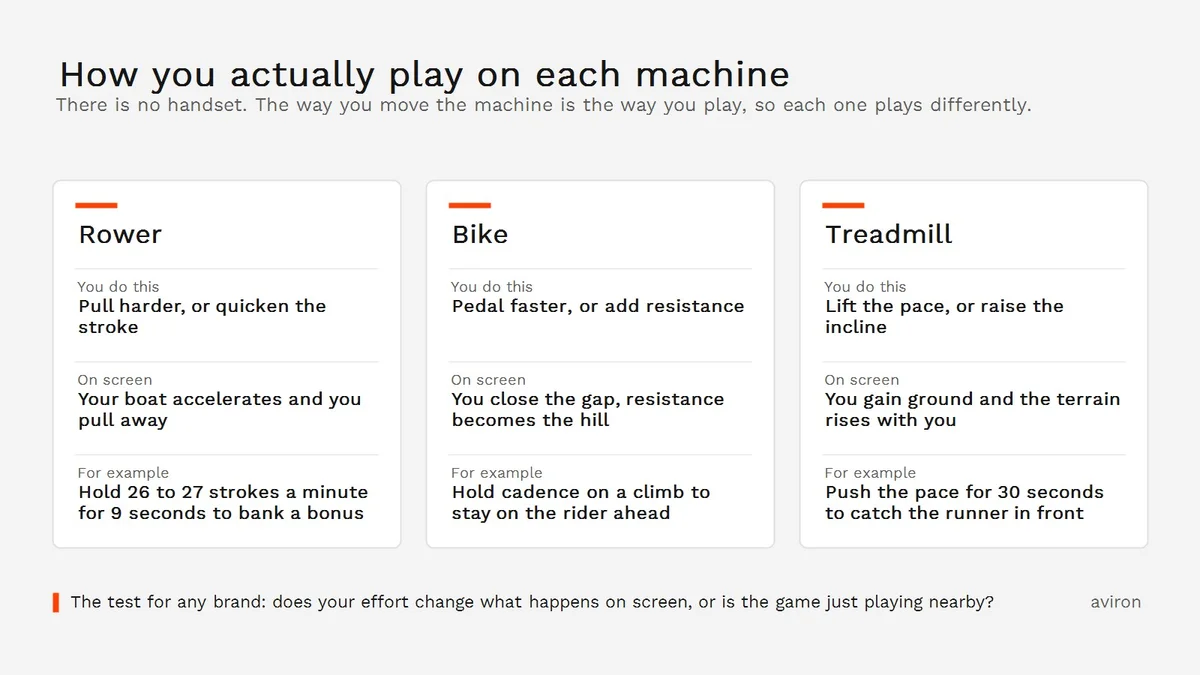
Whichever you choose, the engagement comes from the software, not the motor. A traditional version of any of these machines is much easier to get bored on.
How to Make Exercise Less Boring
Wondering how to make cardio less boring without buying anything new? A few small changes go a long way:
- Rotate workout formats. Alternate games, classes, scenic sessions and free workouts through the week.
- Set small challenges. "Beat yesterday's distance by 100 meters" is far more compelling than "do some cardio."
- Compete against your previous scores. Your last personal best is the most evenly matched opponent you'll ever face.
- Use entertainment on purpose. Save a show you love for workout time only. Researchers call this "temptation bundling." In one study, people who could only listen to page-turner audiobooks at the gym went 51% more often at first, until Thanksgiving got in the way.
- Try intervals. Changing your speed or effort every minute or two makes time move faster and fits more work into less of it.
- Alternate cardio types. Treadmill on Monday, rower on Wednesday, bike on Friday, if you have access to more than one.
- Exercise with friends. A workout partner, even a virtual one, makes it easier to show up and harder to quit early.
- Set performance goals. A 5K time, a 2,000-meter row, a 30-day streak. Goals give every session a purpose.
- Use games. Turn the workout into something you play rather than something you endure.
If you'd like all of that on one machine, it's exactly what Aviron World is designed for: games, races, classes, scenic routes and streaming in one place, so you can change the workout without changing the equipment. For more ideas, see our tips on how to make workouts less boring.
Best Exercise Equipment by Personality
Quick answers, matched to how you're wired.
Best for Gamers
An Aviron treadmill or rower. Both have real games where your pace or stroke is the controller, plus live multiplayer and leaderboards. If you already love games, start here.
Best for Competitive People
Equipment with leaderboards and live races. Look for real-time racing against other people, not just a ranking you check afterwards. Aviron, Zwift and Peloton all offer competitive features, each in a different style.
Best for People Who Love Netflix
A connected treadmill with entertainment apps. Check that streaming services run on the built-in screen, since not every brand allows them. A bike or rower with streaming works just as well, and a show you only watch while working out is a powerful reason to show up.
Best for People Who Hate Running
A rower or a bike. Both deliver serious cardio without the impact. Choose a rower for full-body work, or a bike for lower-impact, longer sessions.
Best for People Who Like Classes
Peloton-style equipment built around instructor-led sessions. If you want classes and the option of games and other formats on the days classes don't appeal, choose a platform that offers both.
Best for People Who Want Variety
An interactive treadmill. It covers the widest range of activities, from walking and running to incline hiking, intervals, games, scenic routes and streaming.
Best for People Who Want Full-Body Cardio
A rower. Rowing works your legs, core, back and arms in every stroke, which makes it one of the most efficient cardio workouts you can do at home.
Frequently Asked Questions
What exercise equipment is best for someone who gets bored easily?
Equipment that offers variety, interactive workouts, games, entertainment and measurable progress. For most people that means an interactive treadmill, a gamified rowing machine or a connected bike, because they combine cardio with games, competition, classes, scenic routes and streaming. Choose the movement you enjoy most, then check that the software gives you several ways to use it.
What is the least boring workout machine?
For most people, an interactive treadmill or a gamified rower. A treadmill offers the most workout variety, from walking and incline hiking to running, games and scenic routes, while a rower keeps your whole body (and your mind) busy. A traditional machine with no screen or software is much easier to get bored on.
How can I make cardio less boring?
Change something every session: the format, the duration, the intensity or the goal. Set small challenges, compete against your previous scores, try intervals, alternate machines, work out with friends, and save a favorite show for workouts only. Gamified equipment builds many of these tactics in, so you don't have to engineer them yourself.
Are workout games actually effective?
Yes, for the thing that matters most: consistency. The physical work is the same as a regular session, so the fitness benefits are the same. What changes is how likely you are to keep doing it. A 2022 meta-analysis of randomized trials found gamification produced a small-to-medium increase in physical activity, and in one large trial, the version built around competition delivered the biggest and longest-lasting gains.
What is gamified fitness?
Gamified fitness applies game mechanics, such as points, levels, challenges, leaderboards, rewards and progress tracking, to exercise. Instead of measuring a workout only by time or distance, it gives each session a goal. In the best versions, your physical effort is the controller, so the game responds directly to how hard you work.
Is a treadmill or rowing machine more fun?
It depends on how you like to move. A treadmill offers more variety (walking, running, incline hiking and intervals), while a rower offers more full-body engagement and short, intense workouts. On an interactive machine, both can be a lot of fun, because games, races and scenic routes run on either. Our rowing machine vs treadmill guide goes deeper.
What exercise equipment has games?
Most exercise equipment with games is connected cardio equipment: interactive treadmills, rowers and bikes. Aviron builds games into its treadmills, rowers and bikes, plus its Abs Hero core trainer. Ergatta offers game-based workouts on a water rower, NordicTrack's iFIT has added Ergatta-licensed races, Peloton has its Lanebreak game mode, Zwift turns smart bikes and trainers into a virtual racing world, and VR headsets run fitness games like Beat Saber.
Which treadmill has games?
Aviron's Justice, Podium and Summit treadmills all have a library of built-in games where your speed and incline control the action, alongside live races, scenic routes, classes and streaming. A few other brands have added game modes too: Peloton has brought its Lanebreak mode to the Tread, and NordicTrack treadmills on iFIT now include game-style races. Zwift Run also works with almost any treadmill if you add a footpod.
Can you play games while exercising?
Yes. On interactive exercise equipment, the game is the workout: your pace, stroke or pedaling drives what happens on screen, so playing well means working harder. Aviron machines, smart bike apps like Zwift and VR fitness apps all work this way. That's different from watching a game while you exercise, where the two never interact.
What is the best alternative to fitness classes?
Game-based workouts are the most popular alternative, especially for people who prefer objectives and competition to following an instructor. Scenic routes, structured training programs, streaming while you work out and live races against other people are good options too. Platforms like Aviron combine classes with all of these, so you can mix formats instead of committing to one.
Final Verdict: Choose Equipment That Gives You Reasons to Come Back
The best exercise machine isn't necessarily the one that burns the most calories or has the highest top speed. It's the one you actually want to use repeatedly. A machine you use four times a week beats a technically better one you use twice a month, every single time.
So shop for reasons to come back. Look for variety, progress you can see, competition that suits your personality, and entertainment for the days you just need the time to pass. Be honest about the movement you enjoy, then choose the equipment that turns it into something you look forward to.
For people who lose interest in repetitive workouts, Aviron's combination of games, competition, scenic experiences, guided training and entertainment gives you multiple ways to exercise depending on your mood. It's why 92% of members are still working out a year later, and why every first-time machine purchase in the contiguous US comes with a 30-day risk-free home trial, so you can find out for yourself.
End boring workouts
Treadmills, rowers and bikes with games, races, classes, scenic routes and streaming, all on one membership. Try one at home for 30 days. If you're bored by week four, send it back.
Shop Aviron →30-day risk-free home trial · Free shipping · 0% APR financing via Affirm · HSA/FSA eligible


